Three layers, one article
SEO, AEO and GEO worked at the same time on the same piece of content, with no duplicated writing and no separate "AI version" of anything.
/ Case study · SEO, GEO & AEO
A Spanish-language niche site about the One Piece Card Game, built end to end as a live testbed for a complete organic visibility strategy: classic SEO, answer engine optimisation and generative engine optimisation. Self-hosted infrastructure, a methodology documented before the first article, and affiliate monetisation designed in from the start.
Where it stands: the site is live. It launched in
September 2026 and indexing is now open, after being held back on purpose
(noindex) through the whole build. No traffic or ranking claims here yet:
the day zero baseline was captured before the first indexation, and measuring honestly
against it from the first day is the whole point.
/ In short
SEO, AEO and GEO worked at the same time on the same piece of content, with no duplicated writing and no separate "AI version" of anything.
Four hubs, each answering a different stage of the journey, from learning the rules to deciding what to buy. Product logic, not blog logic.
FAQPage markup is built by parsing the visible <details> blocks,
so what the reader sees and what the bot reads can never drift apart. No cloaking.
The "zero mentions" measurement from before publishing anything exists as data. Most projects never have that baseline because they start measuring too late.
ChatGPT, Perplexity Pro, Google AI and Claude, run on the first of every month and logged against the baseline. Visibility inside AI treated as a metric, not a hunch.
Docker, Nginx Proxy Manager and a Cloudflare Tunnel on my own server. The rank tracker and the GEO tracker run there too. The only recurring cost is the domain.
Annotated card, playmat, pack simulator and colour system. All built and running, teaching the mechanism instead of describing it.
Blocksy as a base, then overridden with my own child theme. Native Gutenberg blocks instead of a page builder, WebP and automated compression. Quick on a phone, not just on my desk.
A rule I set myself: zero SaaS subscriptions. Every tracker runs on hardware I own. Slower than renting the answer, and that is exactly the point.
Competitor audit with Screaming Frog, keyword filtering with the reasons written down, and the day zero GEO baseline captured.
Architecture by search intent, custom child theme, interactive components and the
automatic schema. noindex on the whole time.
Launch. Indexing opened and the first wave of content went live, with tracking already running rather than set up afterwards.
The 20-prompt battery across four engines every month, plus rank tracking, measured against a baseline that already exists.
/ 01 · The project
devilfruittcg.com is not an unstructured blog or a training exercise. It is designed as an editorial product: intentional content architecture, a custom child theme with interactive components, and a positioning strategy meant to work both in Google and in the generative answer engines that are reshaping how people find information.
It runs as a real affiliate project and as a living case study at the same time, which is exactly the kind of work I offer as a service.
I set myself one rule before starting: no paid tools. Rank tracking, GEO tracking, audits and automation all run on hardware I own. Buying a subscription would have been faster, and that is precisely why I did not. The goal was to learn the technical side from the root, understanding what every piece does instead of renting the answer.
An SEO, GEO and AEO architecture case for a collecting niche: content that an LLM can cite (direct answers, schema generated from the DOM), interactive components used as link assets, and a design system built to stand out in a market full of generic templates. All of it verifiable in production, with no invented data left unmarked.
/ 02 · Content architecture
Every section attacks a different type of search and answers a different stage of the customer journey. It is not a blog, it is a site laid out with product logic.
Editorial interlinking, not forced: each article links to the next logical piece in the
journey (basic rules, how to play, reading a card, collecting, decks) cited in running
text instead of generic "related posts" boxes. Clean permalinks
(/%postname%/, no dates) so the content does not look stale in the SERP.
/ 03 · Strategy
Most niche sites optimise for Google only. This one is built to rank on three fronts with the same article, without duplicated work.
One article
noindex through the build, so the site was not indexed until the content was complete. A deliberate decision, not an oversight. Lifted at launch.<details><summary> in functions.php. No cloaking, and a single source of truth between what the user sees and what the bot reads.ImageObject schema, so the domain travels with the picture when it gets shared./ 04 · Editorial components
All of these are built and running on the live site. To stand apart from the generic affiliate sites in the niche, they teach the mechanism instead of listing facts, which is what earns natural links and what an LLM can cite as an authority on how something works, not just on the number.
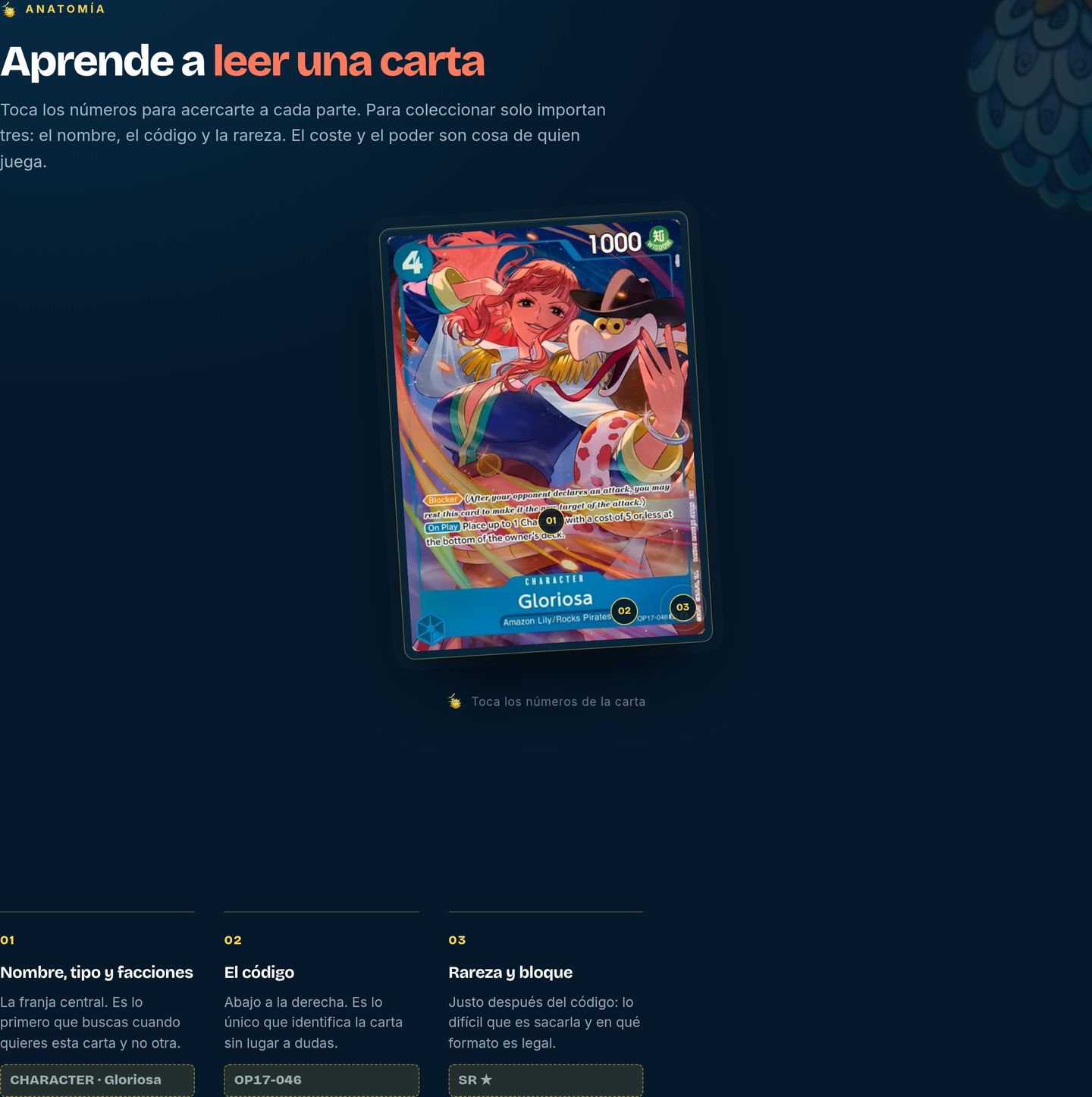
Tap any number to zoom into that part of an actual card: cost, power, name, code and rarity. It teaches you to read the physical object rather than describing it in a paragraph.
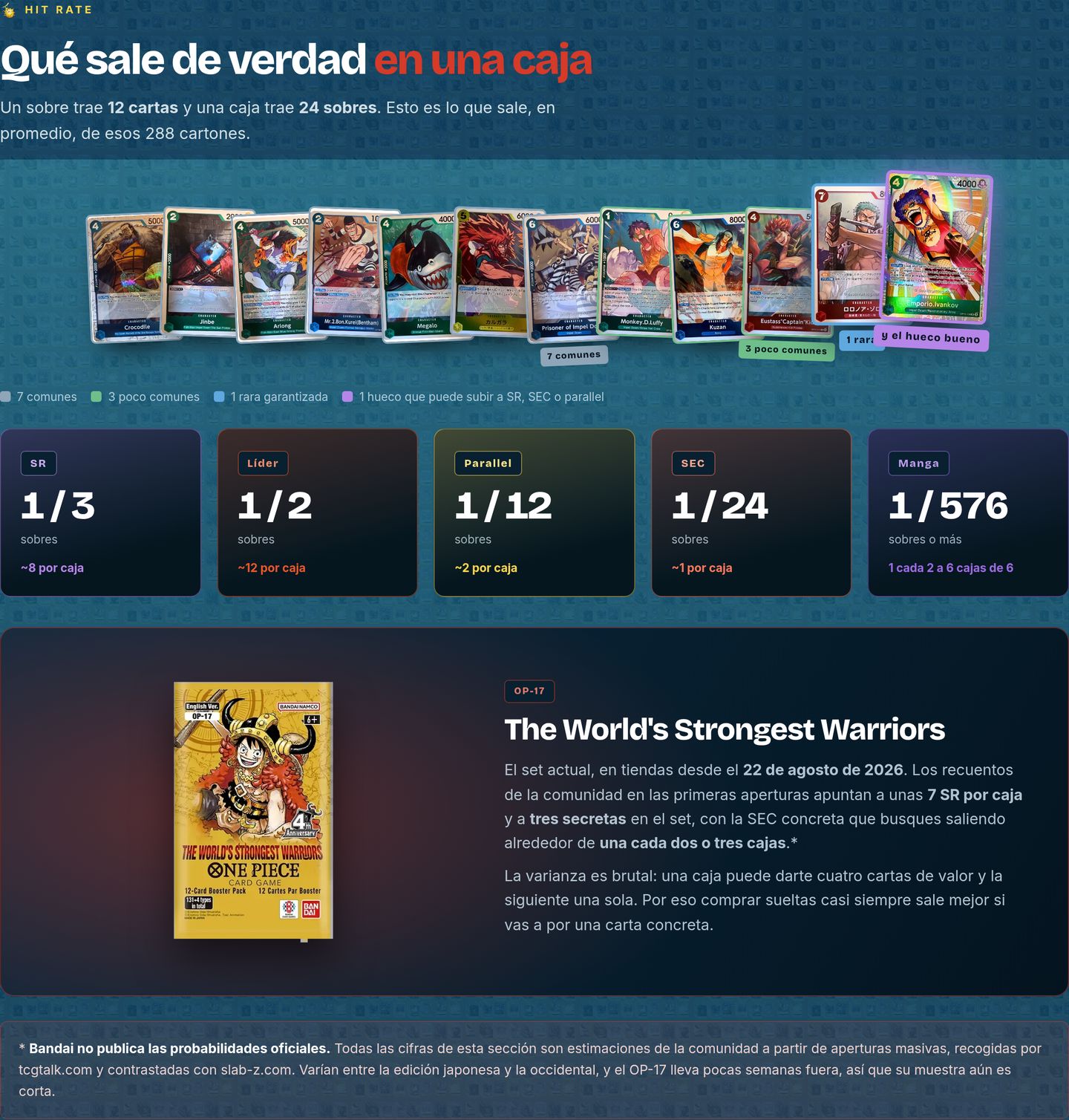
What a pack actually contains, with pull rates cited with source and date, and an explicit note that Bandai does not publish official probabilities. Verifiable and linkable, which is what answer engines reward.
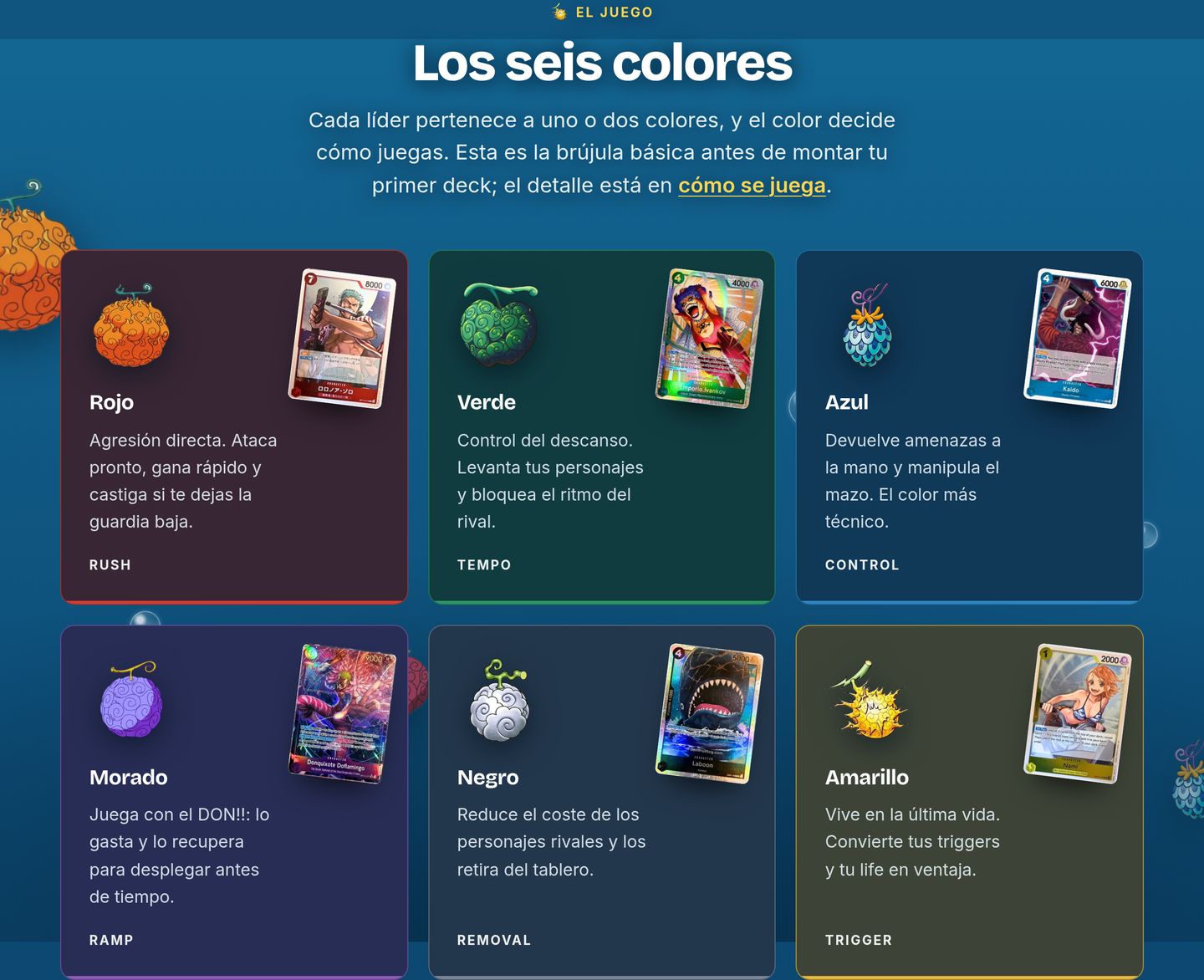
The six colours with their archetype in one line each, tagged rush, tempo, control, ramp, removal and trigger. Direct-answer format, the shape Google turns into a featured snippet.
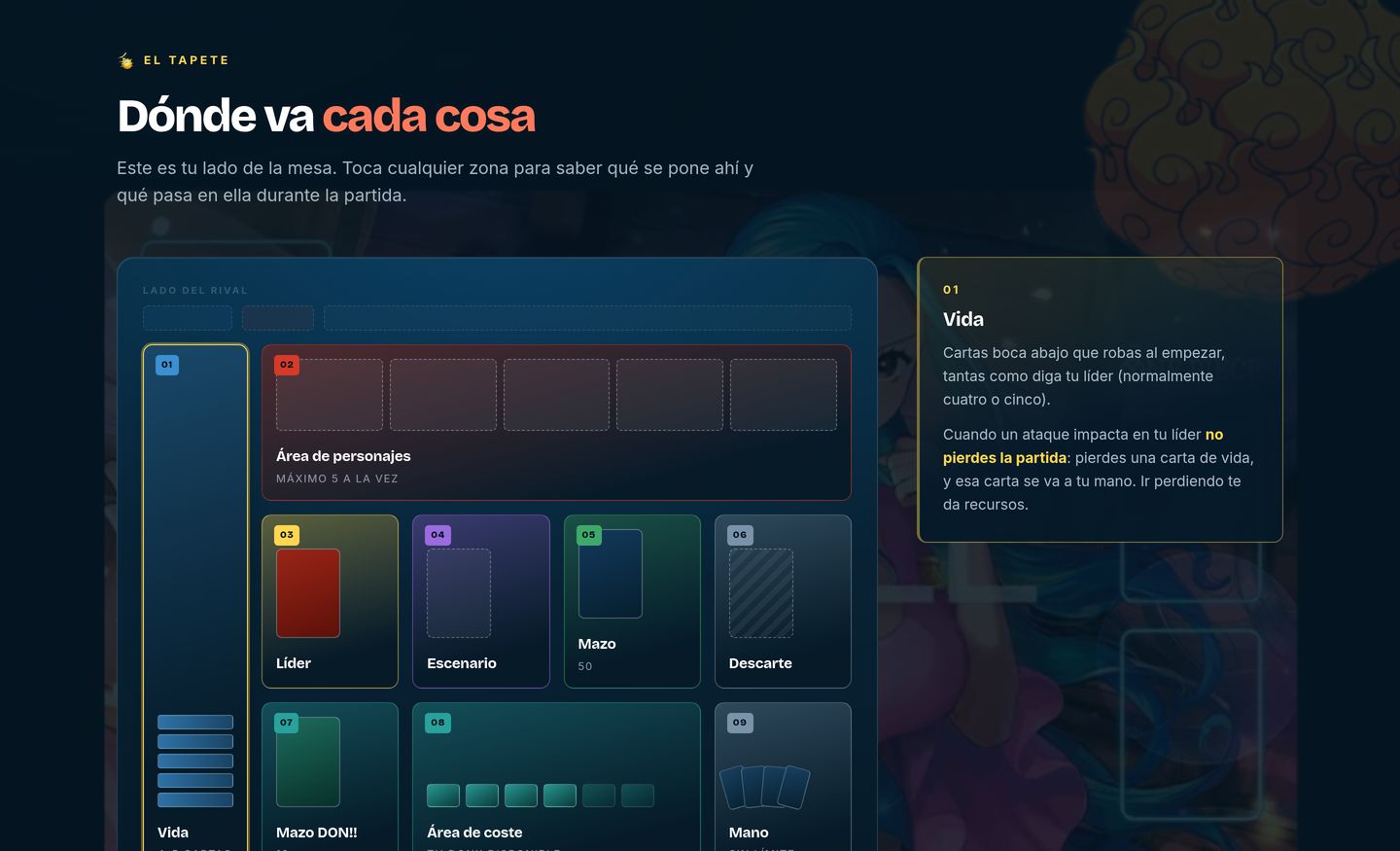
Nine clickable board zones, each with its own explanation. Content a new player cannot get anywhere else in Spanish, built as a component rather than a paragraph.
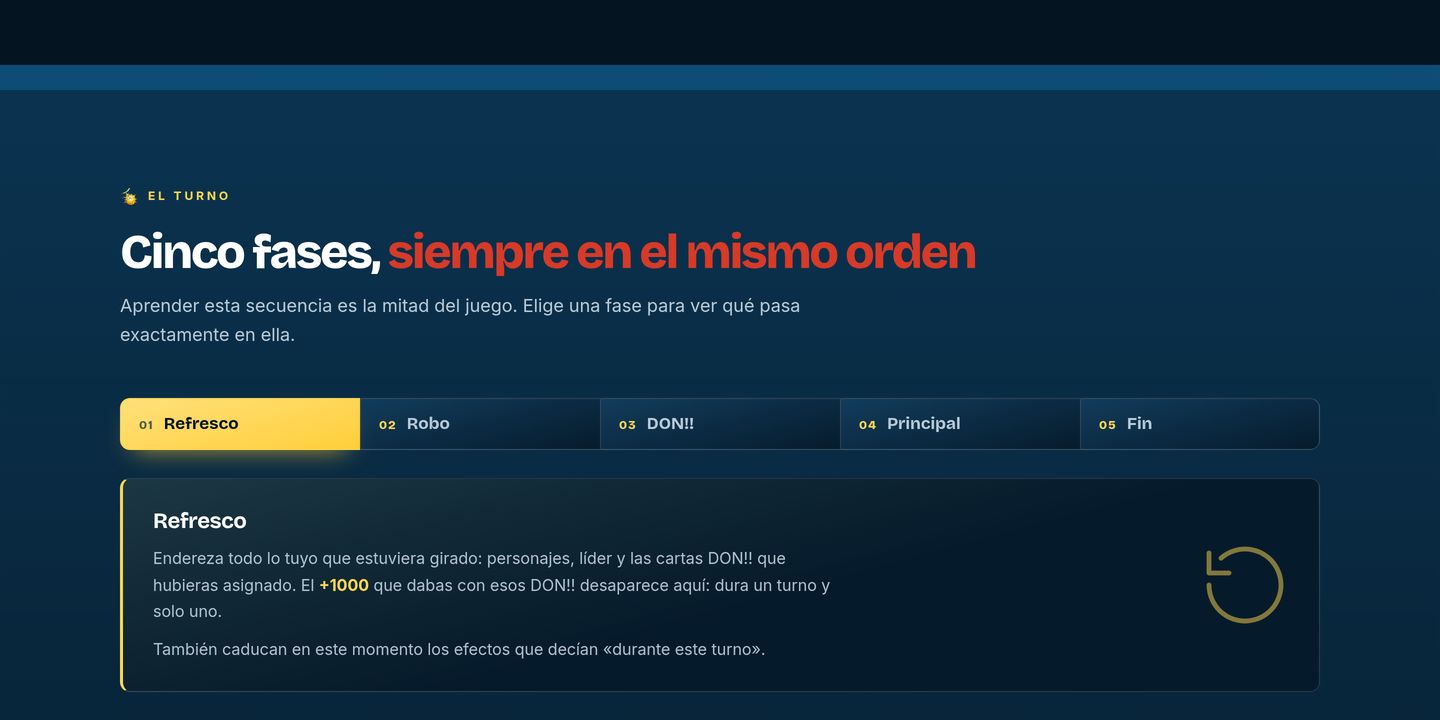
The five phases of a turn as a selectable sequence. Each state is a short, direct answer, which is exactly the shape Google can lift into a featured snippet.
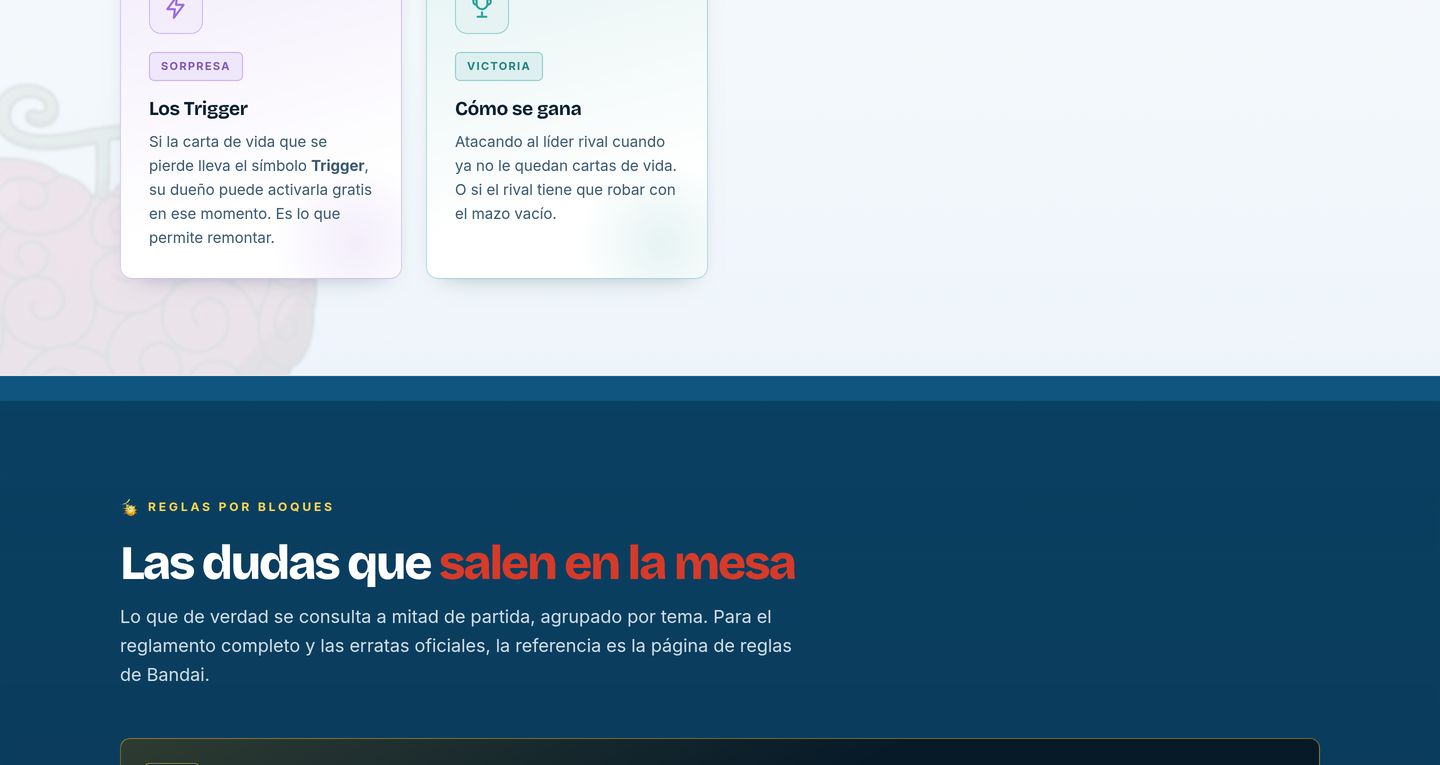
Grouped questions built with native <details> elements. The same
markup the reader opens is what generates the FAQPage schema, so the two can never
drift apart.
/ 05 · Technical stack
The whole stack is self-hosted or free. The only recurring cost is the domain, around 10€ a year. No Ahrefs, no Semrush, no paid rank tracker.
/ 06 · Editorial rigour
Google weighs Experience, Expertise, Authoritativeness and Trustworthiness. Each of the four has a concrete answer in this project.
| E-E-A-T signal | How it is implemented |
|---|---|
| Experience | My own collection, tracked in an app. Photos of real cards I own, no stock and no official Bandai art. First-hand data: pull rates and real purchase prices. |
| Expertise | Pull rates and tournament meta figures cited with source and date. An explicit note whenever two sources disagree, editorial honesty instead of inventing consensus. No invented data left unmarked. |
| Authoritativeness | Interactive components that demonstrate deep knowledge of the object itself: the card, the playmat, the mechanics. Linkable assets that earn natural references. |
| Trustworthiness | Affiliate disclosure in the footer from day one. rel="sponsored nofollow" on every commercial link. Prices flagged as approximate. Explicit placeholders wherever a verified figure is still missing. |
/ 07 · Why it matters
| Dimension | What it shows |
|---|---|
| Technical | Standing up complete self-hosted infrastructure (Docker, Nginx, Cloudflare Tunnel, SSL) without depending on SaaS hosting, plus an editorial pipeline that goes from my desktop to WordPress in one command. |
| SEO | Content architecture by intent, competitive audit with real data (Screaming Frog and manual SERPs), and keyword research documented with the reasoning behind every choice, the ones taken and the ones dropped. |
| AEO | FAQPage schema generated from the DOM instead of hand-injected. Direct answer blocks. Tables and H2s designed for LLM extraction. Interactive components as citable assets. |
| GEO | A visibility measurement protocol across ChatGPT, Perplexity, Google AI and Claude, with history starting before the first article. Equivalent commercial tools run 100 to 300€ a month, this one runs on my own server. |
| Design | An identity of its own, well away from generic template aesthetics. Colour tokens, typography and reusable components, with automatic background cutout in PHP and GD. |
| Business | A real niche, a real community and monetisation designed in from the start. Tracking exists from before the first publication, so the day zero state is verifiable. |
/ 08 · The site
A visual system built around the niche, not around a stock theme. Same tokens across every hub, so the site reads as one product.
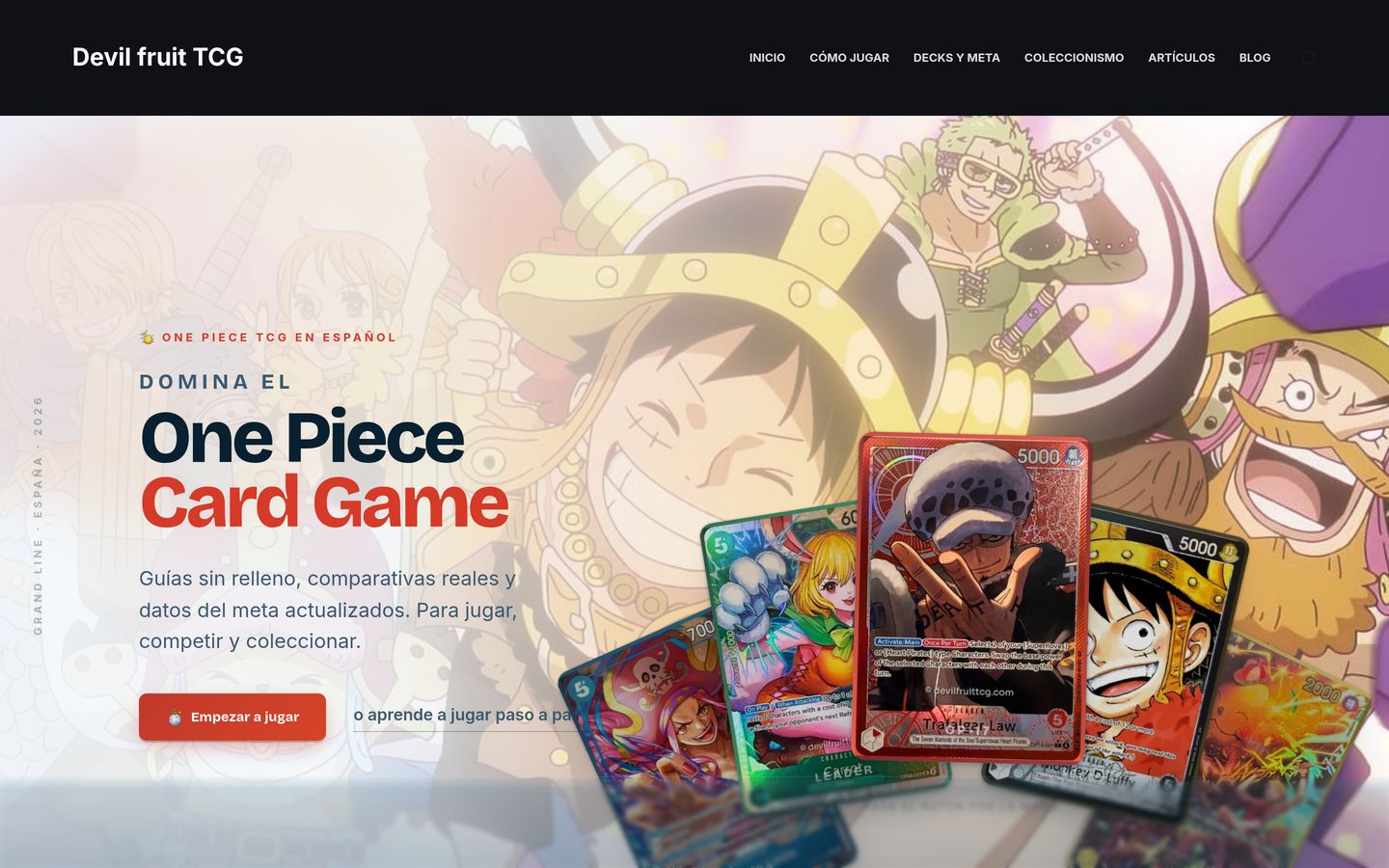
Positioning above the fold and a single entry point into the how-to-play hub.
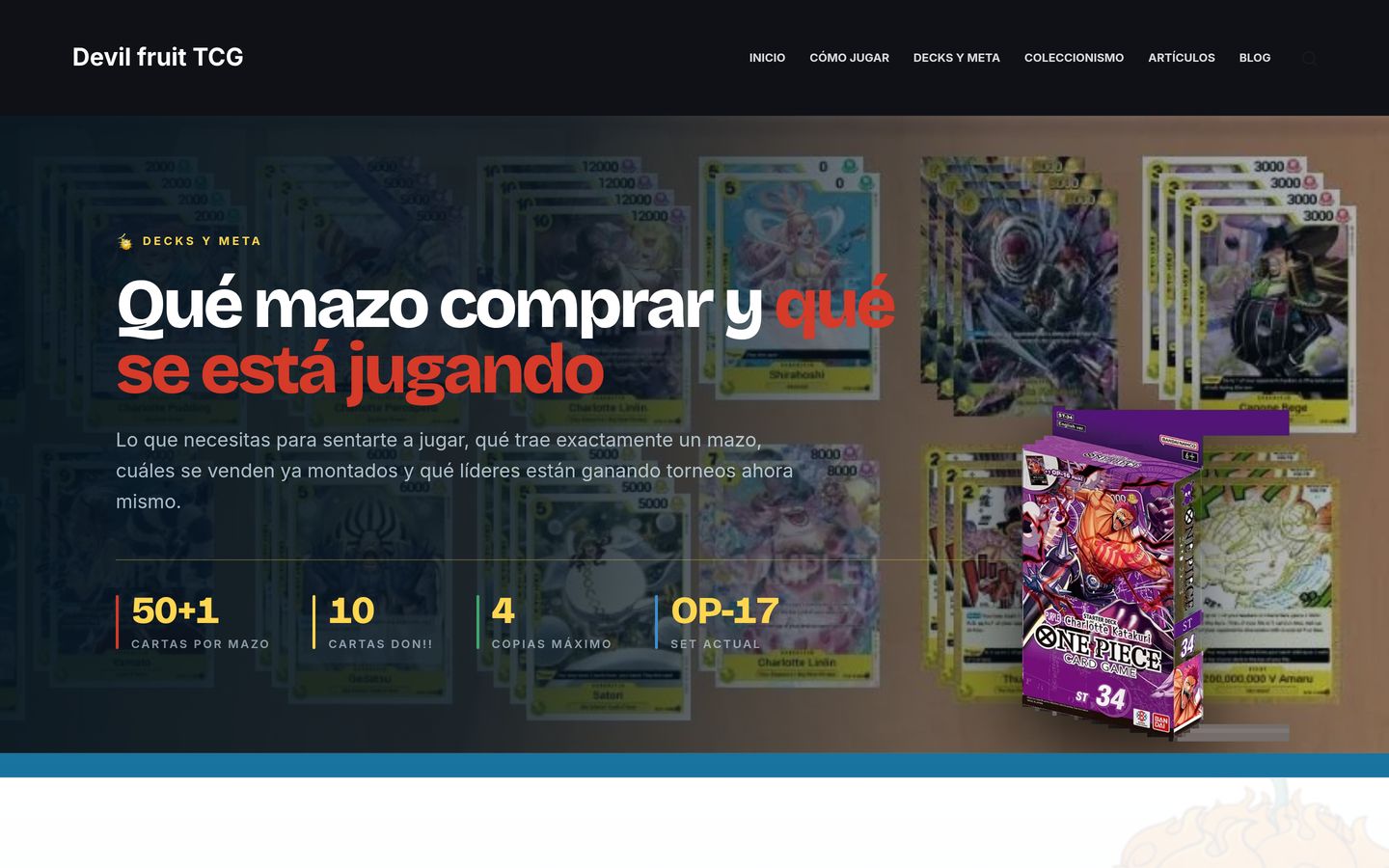
The commercial hub, where informational intent turns into a buying decision.
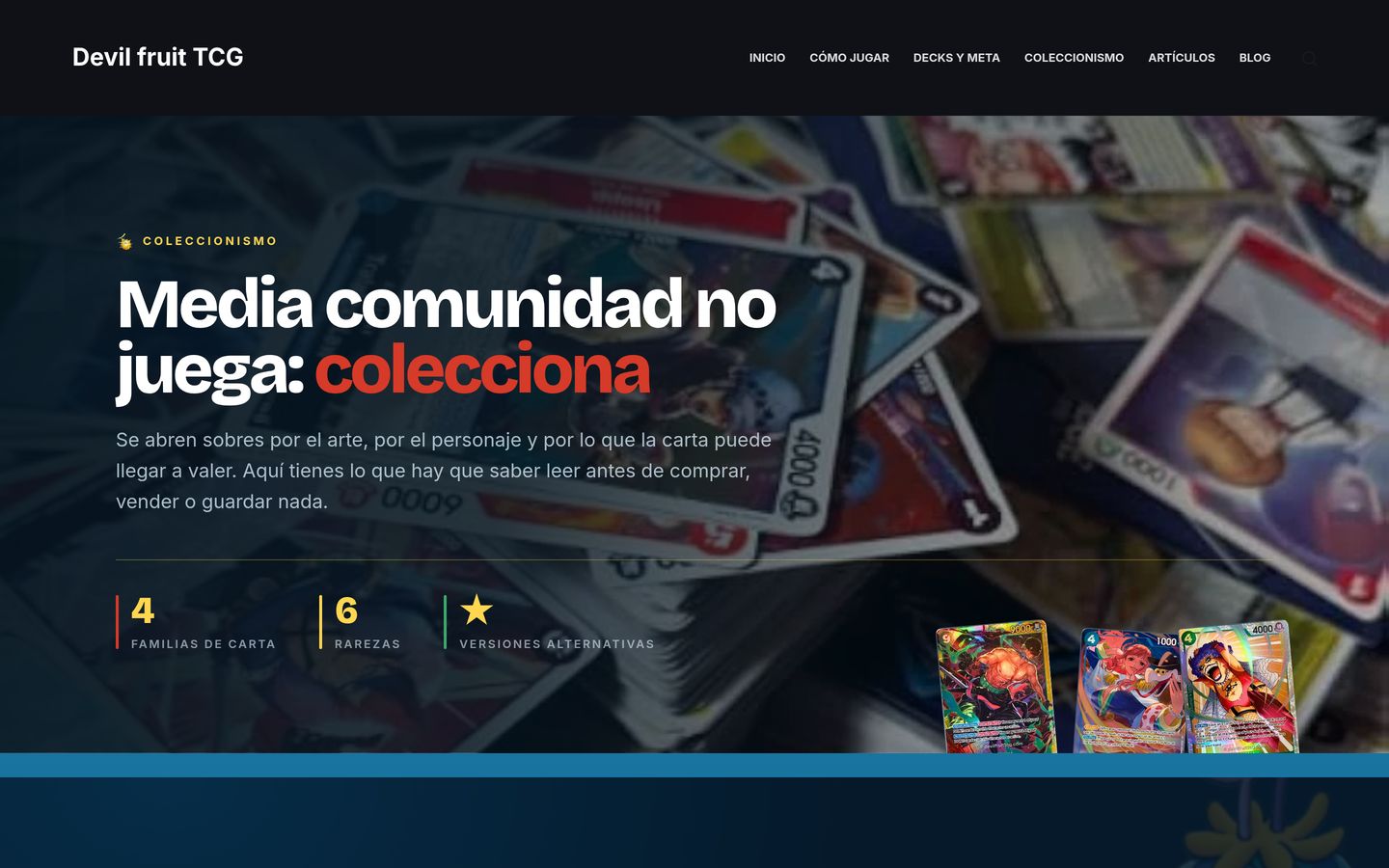
Rarities, active sets and marketplaces, the transactional end of the journey.
/ Next
This project is the clearest version of how I like to work: one system, built deep instead of wide, where the design, the code and the search strategy are the same decision. If that is the kind of work you need, say hi.